China Top Maxillofacial Plating Systems Manufacturers

Time:2026-10-19 Author:Sophia
0%

China’s maxillofacial implant industry is expanding alongside demand for precise facial trauma and reconstructive care. Maxillofacial Plating Systems support fixation across the mandible, midface, orbital rim, and cranial regions. Their performance depends on more than titanium grade or catalogue size.

The World Health Organization reports approximately 1.19 million annual road traffic deaths worldwide. It also estimates that 20–50 million people suffer nonfatal injuries. These figures underline the continuing need for dependable facial fracture management. WHO’s Global Status Report on Road Safety 2023 provides important context for this clinical demand.

Industry research also signals steady growth in cranio-maxillofacial fixation devices. Reports from Grand View Research and Fortune Business Insights identify trauma care, reconstructive surgery, and aging populations as major market drivers. However, market forecasts vary by methodology and regional coverage. They should guide investigation, not replace clinical judgment.

Evaluating China’s leading manufacturers requires practical evidence. Review implant materials, plate profiles, screw compatibility, instrument quality, sterilization documentation, and traceability systems. ISO 13485 certification can indicate a structured medical-device quality system. China’s National Medical Products Administration registration also supports regulatory verification within the domestic market.

A useful supplier should provide clear technical files and responsive engineering support. Surgeons often need low-profile plates, stable screw purchase, and instruments that remain reliable in a narrow operative field. Small design details matter. A plate that bends predictably can save valuable surgical time.

Still, no ranking can guarantee clinical suitability. Product selection must consider anatomy, surgical technique, patient condition, and local regulations. This introduction compares China’s manufacturers through those practical lenses, while acknowledging an uncomfortable limitation: public supplier information is sometimes incomplete. Independent validation remains essential.
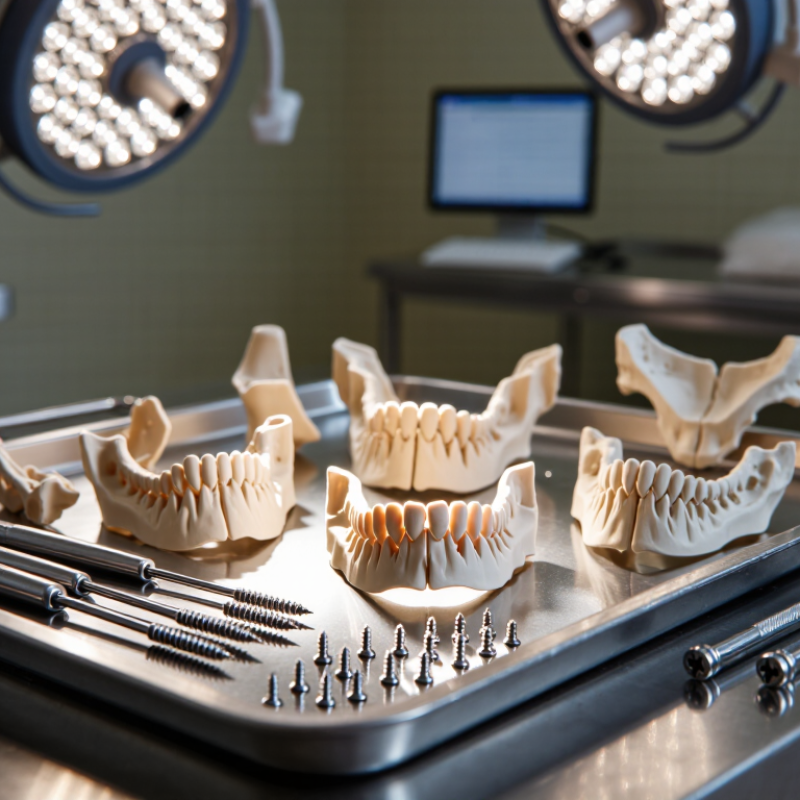
China Top Maxillofacial Plating Systems Manufacturers

Definition and Scope of Maxillofacial Plating Systems

China’s maxillofacial plating systems industry serves trauma, reconstructive, and corrective jaw procedures. A maxillofacial plating system is a group of medical implants and instruments used to stabilize facial bones. Typical components include plates, screws, meshes, drills, drivers, and bending tools. These parts work together to maintain bone alignment during healing. Fit matters. Poor contouring may create pressure, movement, or soft-tissue irritation.

The scope extends beyond the metal plate itself. It includes implant geometry, screw diameter, hole design, material selection, sterilization compatibility, packaging, and surgical instruments. Systems may support the mandible, midface, orbital rim, nasal region, or zygomatic area. Some designs are thin for visible facial zones. Others require greater structural support. Surgeons select components after reviewing imaging, fracture patterns, bone quality, and soft-tissue conditions. It is not a universal kit.

Reliable manufacturers should maintain documented material controls, dimensional testing, surface inspection, and production traceability. Practical evaluation also considers whether instruments grip screws securely and whether plates bend predictably without cracking. A polished appearance does not prove clinical suitability. No system is perfect. Even a well-designed plate may perform poorly when selection, contouring, or fixation technique is inappropriate. This is where clinical feedback should challenge factory assumptions. Manufacturers need controlled development, clear instructions, and evidence-based quality checks rather than attractive catalog language.

Key Features of China’s Leading Plating System Manufacturers

China’s leading maxillofacial plating system manufacturers focus on anatomical accuracy, stable fixation, and efficient surgical handling. Experienced engineers develop plates for the mandible, midface, orbital floor, and cranial regions. They often use implant-grade titanium for strength, corrosion resistance, and tissue compatibility. Low-profile edges can reduce soft-tissue irritation. Small details matter.

Reliable manufacturers support design decisions with clinical feedback, mechanical testing, and documented production controls. Computer-aided design helps create accurate contours and consistent screw-hole placement. Some facilities also offer patient-specific planning support, though its quality depends on imaging data and communication. That limitation deserves attention. A technically advanced system may still perform poorly if the instruments feel awkward or the plate bends unpredictably.

Strong suppliers maintain traceability from raw material inspection to final packaging. Their quality systems should include dimensional checks, surface inspection, sterilization compatibility, and batch records. Compliance with recognized medical-device standards strengthens buyer confidence, but certificates alone are not enough. Hospitals should review test reports, surgical instruments, packaging integrity, and after-sales responsiveness. Clear sizing charts and multilingual technical documents also improve daily use. In practice, dependable delivery can matter as much as a polished product sample. Mistakes still happen, especially during customization, so transparent correction procedures are essential.

Materials and Technologies Used in Maxillofacial Plates

China Top Maxillofacial Plating Systems Manufacturers

Materials and manufacturing technologies strongly influence the safety of maxillofacial plates. Titanium and titanium alloys remain widely used because they combine strength, corrosion resistance, and relatively low weight. Their radiographic visibility can also support postoperative assessment. However, titanium is not automatically the best choice for every case. Plate thickness, contour, screw compatibility, and the patient’s bone quality must be evaluated together.

Some systems use bioresorbable polymers when temporary support is appropriate. These materials may reduce the need for later removal, but their strength and degradation behavior require careful selection. Stainless steel can provide dependable mechanical performance, although it may create greater imaging interference and a higher weight. The decision needs evidence, not marketing language.

Computer tomography data now supports patient-specific planning and digitally shaped plates. CNC machining, precision laser cutting, and controlled bending can improve dimensional accuracy. Additive manufacturing may create complex structures, but surface roughness and internal defects still demand strict inspection. Finishing processes, cleaning, packaging, and sterilization are equally important. A polished edge matters near delicate soft tissue.

Reliable manufacturers should maintain traceable material certificates, validated processes, and documented mechanical testing. They should also control dimensional tolerances across production batches. No process is perfect. Even a well-designed plate can fail if the fit is poor or handling is careless. Engineers and surgeons must review the design together, while remaining open to limitations, unexpected anatomy, and the need for improvement.

China Top Maxillofacial Plating Systems Manufacturers - Materials and Technologies Used in Maxillofacial Plates

Material Category Typical Material Relevant Standards Typical Density Elastic Modulus Common Plate Characteristics Typical Manufacturing Technologies Common Maxillofacial Applications
Metallic Commercially Pure Titanium, Grades 1–4 ASTM F67; ISO 5832-2 Approximately 4.5 g/cm³ Approximately 100–115 GPa Lightweight, corrosion resistant, biocompatible, and relatively easy to contour during surgery CNC milling, precision stamping, laser cutting, deburring, passivation, and electropolishing Mandibular reconstruction, midface fixation, orbital rim repair, and craniofacial trauma
Metallic Titanium Alloy Ti-6Al-4V ELI ASTM F136; ISO 5832-3 Approximately 4.4–4.5 g/cm³ Approximately 105–115 GPa Higher strength and fatigue resistance than commercially pure titanium; suitable for load-bearing designs Cold forming, CNC machining, laser cutting, electron-beam or laser additive manufacturing, and anodizing Load-bearing mandibular plates, patient-specific implants, and complex craniofacial reconstruction
Metallic Austenitic Stainless Steel 316L ASTM F138/F139; ISO 5832-1 Approximately 7.9–8.0 g/cm³ Approximately 190–200 GPa High strength and established clinical use; heavier and stiffer than titanium Stamping, CNC machining, laser cutting, electropolishing, and passivation Selected trauma fixation, temporary stabilization, and cost-sensitive applications
Polymer PEEK, Medical Grade ASTM F2026; ISO 10993 evaluation may be applicable Approximately 1.3 g/cm³ Approximately 3.5–4.0 GPa Radiolucent, lightweight, chemically stable, and closer to bone stiffness than metallic materials CNC machining, injection molding, compression molding, and patient-specific CAD/CAM fabrication Patient-specific cranial implants, orbital reconstruction, and non-load-bearing contour restoration
Bioresorbable Polymer PLLA or PLLA-Based Copolymers Material-specific specifications; biological safety commonly assessed under ISO 10993 Approximately 1.2–1.3 g/cm³ Approximately 2–4 GPa, depending on formulation and processing Gradual hydrolytic degradation; avoids permanent metallic hardware but has lower initial strength Injection molding, thermoforming, machining, and controlled annealing Pediatric craniofacial fixation, selected midface repairs, and low-load osteosynthesis
Bioresorbable Polymer PLGA or PGA-Containing Systems Material-specific specifications; ISO 10993 biological evaluation may be applicable Approximately 1.2–1.5 g/cm³ Approximately 2–7 GPa, depending on polymer ratio and crystallinity Faster degradation than PLLA in many formulations; mechanical retention must match healing time Injection molding, extrusion, thermoforming, and controlled polymer blending Selected pediatric and low-load craniofacial fixation procedures
Technical note: Property values are typical reference ranges and may vary according to alloy condition, polymer formulation, heat treatment, manufacturing process, plate geometry, and test method. Final product performance should be verified against the applicable regulatory requirements and validated test data.

Quality Standards and Manufacturing Capabilities

Quality standards define reliable maxillofacial plating systems long before surgery. ISO 13485 requires controlled processes, documented risks, and traceable production records. ISO 14971 supports systematic evaluation of hazards, including plate fracture, screw loosening, and tissue irritation. ASTM F543 provides mechanical testing methods for metallic bone screws. These standards create a useful baseline, not a guarantee.

A 2024 report from Grand View Research estimates the global cranio-maxillofacial fixation market will continue growing through 2030. Demand is rising for anatomically shaped plates, lighter profiles, and patient-specific solutions. Manufacturing capability must therefore include precision CNC machining, laser cutting, and validated surface finishing.

Titanium components should show consistent thickness, smooth edges, and accurate hole geometry. Small deviations matter.

Very small details count.

Strong manufacturers use coordinate-measuring machines and sampling plans based on risk. They also maintain batch records from raw material certificates to final packaging. Independent testing can verify tensile strength, fatigue performance, corrosion resistance, and sterilization compatibility. The 2023 ISO Survey reports more than 1.5 million ISO management-system certificates worldwide, showing broad adoption of quality frameworks. Yet certification alone can hide weak daily execution. A supplier should provide inspection data, nonconformance records, and corrective-action evidence. Factory audits remain necessary. No production line is perfect, and honest reporting is more credible than flawless-looking paperwork.

How to Evaluate a Chinese Maxillofacial Plating Supplier

China Top Maxillofacial Plating Systems Manufacturers

How to Evaluate a Chinese Maxillofacial Plating Supplier

Evaluating a Chinese maxillofacial plating supplier requires more than comparing prices. Review the supplier’s quality system, production experience, and technical control. Ask for current ISO 13485 certification and product-specific regulatory documents. Check whether certificates match the actual factory and manufacturing site. This detail is often missed.

Inspect the plating system closely. Confirm the titanium grade, plate thickness, screw dimensions, and hole design. Request material certificates and batch-level traceability records. A reliable supplier should explain how raw materials move through machining, cleaning, inspection, and packaging. Ask for design validation, fatigue testing, and sterilization information when applicable. Do not accept vague test reports.

Sample evaluation matters. Examine plate edges, screw threads, surface finish, and instrument compatibility. Small burrs can reveal weak process control. Test several batches, not one attractive sample. Request inspection records, complaint procedures, and corrective-action reports. A polished document set can still hide inconsistent production.

Communication also shows competence. Technical staff should answer clearly and provide controlled drawings. Ask how changes are approved and recorded. Confirm lead times, packaging protection, and export documentation. A factory visit or independent audit adds useful evidence, although it cannot replace clinical judgment. Some suppliers may struggle with English documentation. That is manageable if records remain accurate, complete, and traceable. Be cautious.

FAQS

Why are titanium plates commonly used in maxillofacial surgery?

Titanium combines strength, corrosion resistance, and relatively low weight. It also remains visible during postoperative imaging. However, titanium is not ideal for every patient. Bone quality and plate design still matter.

Are bioresorbable plates suitable for every case?

No. Bioresorbable polymers may suit temporary support when later removal is undesirable. Their strength and degradation behavior require careful evaluation. The choice should follow clinical evidence, not attractive claims.

Which manufacturing technologies improve plate accuracy?

CT-based planning can support patient-specific designs. CNC machining, laser cutting, and controlled bending improve dimensional accuracy. Additive manufacturing creates complex shapes, but defects and rough surfaces need inspection. Technology alone does not guarantee a good fit.

What physical details should buyers inspect?

Check plate thickness, hole geometry, screw threads, edges, and surface finish. Look for burrs around small holes. Smooth edges matter near delicate soft tissue. Tiny defects can expose larger process problems.

Which quality documents should a supplier provide?

Request material certificates, batch traceability records, mechanical test results, and sterilization information. Review risk-management records and corrective-action reports. Certification helps, but daily execution matters more. Paperwork can look better than reality.

How can a supplier’s production consistency be evaluated?

Examine samples from several production batches. Compare dimensions, hole positions, thread quality, and surface finishes. Ask for inspection data and nonconformance records. One excellent sample proves very little.

What questions should be asked about supplier manufacturing controls?

Ask how materials move from machining through cleaning, inspection, packaging, and sterilization. Confirm how design changes are approved and recorded. Request controlled drawings and documented tolerances. Clear answers usually reveal stronger technical control.

Can a factory audit replace clinical judgment?

No. An audit can reveal equipment, records, and process weaknesses. It cannot predict every patient’s anatomy or surgical challenge. Engineers and surgeons should review the design together. Even careful planning may need improvement.

Conclusion

This article provides a practical overview of Maxillofacial Plating Systems, including their role in stabilizing facial bones during reconstructive and trauma surgery. It explains the main product categories, such as plates, screws, mesh, and related fixation components, while highlighting important design features including anatomical adaptability, low-profile construction, strength, corrosion resistance, and surgical convenience. The discussion also introduces commonly used materials and manufacturing technologies, including medical-grade titanium, titanium alloys, precision machining, forming, surface treatment, and digital production methods.

In addition, the article examines how leading Chinese manufacturers manage quality control, engineering development, traceability, sterilization compatibility, and compliance with applicable medical-device requirements. It concludes with practical guidance for evaluating a Chinese supplier, covering product consistency, material documentation, testing records, production capacity, customization services, delivery reliability, technical support, and communication. These criteria can help hospitals, distributors, and medical-device purchasers make informed and responsible sourcing decisions.

Sophia

Sophia

Sophia is a dedicated marketing professional with an exceptional depth of knowledge about her company's products and services. With a keen understanding of market trends and customer needs, she crafts insightful blog posts that not only inform but also engage readers, enriching the company’s online......