Best Craniofacial Implants Manufacturers in China?

Time:2026-10-31 Author:Sophia
0%

Choosing a craniofacial implant manufacturer in China requires more than comparing prices or polished product photos. These implants may help restore facial contours after trauma, tumor removal, or congenital conditions. Material quality, design accuracy, and reliable production records matter. So does communication.

Craniofacial surgeon Dr. John B. Mulliken is a respected voice in reconstructive care. A cautious paraphrase of the clinical priorities reflected in his work is that reconstruction should consider both form and function. This is a paraphrase, not a verified verbatim quotation. That distinction matters when evaluating medical claims.

This guide introduces Chinese manufacturers and the questions buyers should ask before shortlisting them. Look for clear material specifications, traceability, quality-control procedures, and evidence supporting stated capabilities. Ask how custom dimensions are checked against clinical plans. Request details on sterilization, packaging, and after-sales support. Not just price.

A catalogue can look convincing. Real evidence is better. Company profiles and product descriptions may not show how consistently a supplier manages complex orders or resolves design changes. Independent document review and direct technical discussion can help reveal gaps. No single ranking fits every clinical need. The best choice depends on the intended application, required documentation, delivery expectations, and the clinical team’s assessment. This overview offers a starting point, not a substitute for professional evaluation.
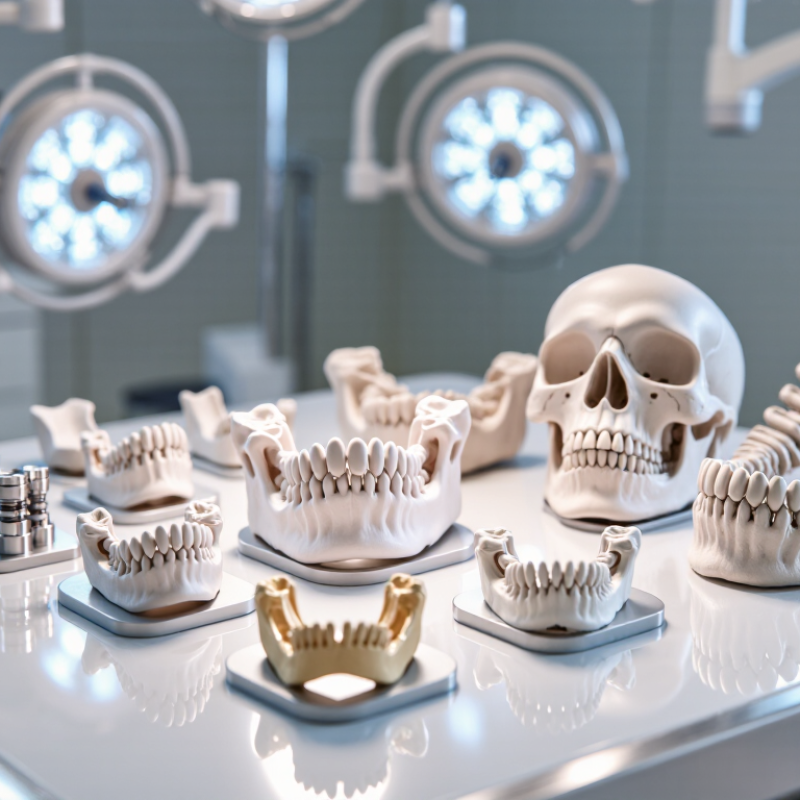
Best Craniofacial Implants Manufacturers in China?

Understanding Craniofacial Implants and Their Medical Applications

Craniofacial implants restore or support areas of the skull and face affected by injury, congenital differences, or surgery. They can rebuild a missing section of the skull, support the eye socket, or improve facial contour. Some are shaped during surgery; others are designed from a patient’s CT images. Not a cosmetic shortcut. Each case involves anatomy, function, and personal goals.

Materials vary with the site and clinical plan. Titanium is strong and may be used for structural reconstruction; porous polyethylene and PEEK are options in selected cases. No material suits every patient. Surgeons consider nearby nerves, soft tissue, infection risk, and how the implant will be fixed. A digital model can help match a defect, but image quality and clinical judgment still matter. A scan is not the patient.

For patient-specific devices, manufacturing quality is part of care. Teams should review dimensional accuracy, material records, cleanliness, and fit before use. Clear communication between surgeons and engineers helps catch design problems early. Still, a precise fit cannot guarantee healing or prevent complications. Recovery depends on the procedure, the patient’s health, and follow-up. Tiny differences matter. A few millimeters near the eye or jaw can change comfort and function, so the treating team must make the final decision.

How to Evaluate Craniofacial Implant Manufacturers in China

Evaluating craniofacial implant manufacturers in China means checking more than catalog photos and unit prices. Ask for traceable material specifications, design drawings, surface-treatment details, and batch-level inspection records. For patient-specific implants, review how imaging files are converted into a design, who approves the final geometry, and how dimensional accuracy is verified. Request examples of inspection reports, not just a statement that products are “high precision.” Small gaps matter.

Clinical evidence should match the implant site and intended use. A 2016 systematic review and meta-analysis in the International Journal of Oral and Maxillofacial Surgery reported pooled survival rates of about 92.2% for auricular, 85.2% for nasal, and 86.2% for orbital craniofacial implants. These figures describe reviewed clinical studies, not a ranking of manufacturers. Still, they show why one broad success claim is insufficient. Ask for relevant clinical follow-up, complication data, and the number of cases behind each claim. Check quality-system certificates directly with the issuing body, and confirm that the certificate covers the actual manufacturing site and product scope. A tidy brochure is not evidence. I would also assess response time for technical questions; this is easy to overlook, but slow, vague answers can complicate design reviews and change control.

Key Materials, Design Capabilities, and Customization Options

Best Craniofacial Implants Manufacturers in China?

Key Materials, Design Capabilities, and Customization Options

When evaluating craniofacial implant manufacturers in China, look beyond material names and ask how each material suits the intended reconstruction. Titanium offers strength and can be shaped into thin, stable components. PEEK is lightweight and radiolucent, while porous polyethylene can support tissue integration. These materials are not interchangeable. The clinical team must select an option based on anatomy, imaging needs, and the patient’s treatment plan. Details matter.

Design capability is just as important. Experienced teams may use CT data, digital modeling, and CNC or additive manufacturing to develop patient-specific contours. Ask how they check edge smoothness, implant thickness, fixation points, and fit against the planned anatomy. A clear review process helps surgeons identify mismatches before production. A polished drawing is not proof of a good fit.

Customization also depends on communication. Confirm what imaging files are accepted, how design revisions are handled, and whether a prototype or digital approval stage is available. Request documentation for material composition, manufacturing controls, sterilization, and product traceability. Not every supplier provides the same level of detail. A missed question can matter. Compare the answers with the clinical team’s requirements, and verify that the proposed device is appropriate for its intended use.

Leading Craniofacial Implant Manufacturers in China

Leading Craniofacial Implant Manufacturers in China

China’s craniofacial implant suppliers differ in engineering depth, documentation, and customization. The WHO’s Global Status Report on Road Safety 2023 estimates that road crashes cause about 1.19 million deaths annually worldwide. This is not an implant-market estimate, but it underscores the continuing need for dependable reconstructive care. Buyers should assess whether a manufacturer can turn CT-based designs into accurately fitted implants, with clear material records and repeatable dimensional checks.

Look for documented quality controls, validated sterilization processes, and traceability from raw material to finished device. Ask how design changes are reviewed and how production tolerances are measured. For patient-specific work, practical details matter: imaging file compatibility, design approval steps, delivery timing, and communication when scans need clarification. Request technical documents and evidence supporting each capability, rather than relying on catalog language alone.

A polished catalog can still hide gaps. Details matter. Even a careful supplier assessment cannot replace clinical judgment or confirm outcomes for every patient. Buyers should compare documented processes, not just price or promised speed, and involve qualified clinical and regulatory teams in evaluation. There is no perfect checklist; that is worth remembering.

Best Craniofacial Implants Manufacturers in China? - Leading Craniofacial Implant Manufacturers in China

This table is a general, company-neutral guide to comparing craniofacial implant manufacturers. Materials, indications, regulatory status, and available services vary by product; verify details against current product documentation.

Comparison dimension Relevant product or capability What to verify
Implant categories Cranial plates and meshes, facial reconstruction implants, and patient-specific implants are distinct product categories. Confirm the manufacturer’s documented product range and the intended anatomical site and indication for each device.
Implant materials Medical-grade titanium alloys, commercially pure titanium, porous polyethylene, and implant-grade PEEK are materials used in some craniofacial applications. Request the exact material specification, material certificates, and product-specific evidence supporting the intended use.
Patient-specific design Some implants are designed using patient imaging data, such as CT scans, to match a planned reconstruction. Check imaging-file requirements, design-review steps, surgeon approval process, lead times, and planning responsibilities.
Manufacturing controls Manufacturing methods and finishing processes depend on the implant material and design; processes should be controlled for the specific device. Ask about process validation, inspection criteria, dimensional checks, surface finishing, and handling of nonconforming products.
Quality management ISO 13485 specifies quality-management-system requirements for organizations involved in medical devices. Verify a current certificate, its issuing body, validity, and whether its scope covers the relevant manufacturing activities and product types.
Biological evaluation Biological evaluation should be appropriate to the device’s materials, contact type, duration, and intended clinical use. Request the applicable biological-safety documentation and confirm it relates to the finished device and its intended use.
Sterilization and packaging Implants may be supplied sterile or non-sterile, depending on the product and its labeling. Confirm the supplied state, sterilization method where applicable, packaging integrity information, and labeled storage conditions.
Traceability Medical-device traceability information can support identification of the product and relevant manufacturing records. Check labeling for applicable lot, batch, or serial identification and obtain the associated device documentation.
China market authorization Medical devices placed on the Chinese market are subject to applicable NMPA registration or filing requirements, which vary by product classification. For the exact product, verify its applicable registration or filing status and confirm that the authorization scope matches the device being offered.
Technical and clinical support Support may include product instructions, surgical-planning information, and case-specific design communication. Ask what support is available, who provides it, response times, and whether materials are available in the required language.

Quality Standards, Regulatory Compliance, and Supplier Verification

Choosing a craniofacial implant manufacturer in China requires more than comparing machining capabilities. Ask whether its quality system is certified to ISO 13485, and check that the certificate covers the actual manufacturing site and product scope. A certificate alone does not prove that every implant is controlled well. Paper can look convincing.

Review how the supplier manages design records, material traceability, and production changes. For each sample, request documentation linking the material lot to the finished device. Ask how biocompatibility evidence, sterilization validation, and packaging controls apply to the intended product and market. Requirements can differ. Details matter. If a supplier gives broad assurances but cannot show relevant records, pause and ask for specifics.

Supplier verification should include a structured audit, not only a video call or a polished presentation. Observe how staff handle work-in-progress parts, record inspections, and separate nonconforming products. Request sample inspection reports and check whether measurements match the agreed specifications. Also review complaint handling and corrective-action records, with sensitive information appropriately protected. Even experienced buyers can miss a mismatch between a certificate and the process used for their order. I have found that a small paperwork gap can reveal a larger communication problem, though it does not automatically prove poor manufacturing. Keep questions specific, document the answers, and confirm key controls before approving production.

FAQS

What are craniofacial implants used for?

They can rebuild part of the skull, support an eye socket, or improve facial contour after injury, congenital differences, or surgery.

Which materials may be used?

Options include titanium, porous polyethylene, and PEEK. The right choice depends on anatomy, nearby nerves, soft tissue, and the clinical plan.

How can CT images help design an implant?

A digital model can help match the implant to a specific defect. But a scan cannot show everything about the patient.

What should buyers check in a supplier’s quality records?

Review material traceability, dimensional checks, sterilization validation, and packaging controls. Ask for records tied to the actual product and manufacturing site.

Does an ISO 13485 certificate prove every implant is well controlled?

No. Check that its scope covers the site and product. Paper can look convincing.

What should a supplier audit include?

Observe how staff inspect parts, record measurements, and separate nonconforming products. Request sample inspection reports and corrective-action records.

What details matter for patient-specific orders?

Confirm imaging file compatibility, design approval steps, delivery timing, and how the team handles unclear scans. Small gaps can cause delays.

Does a precise implant fit guarantee a good recovery?

No. Healing depends on the procedure, the patient’s health, and follow-up. A few millimeters near the eye or jaw can affect comfort.

Is there a perfect supplier checklist?

No checklist is perfect. Compare documented processes, not just price or promised speed. I would still ask twice when an answer feels vague.

Conclusion

Craniofacial Implants are specialized medical devices used to restore or support facial structures affected by injury, congenital conditions, or surgical procedures. Choosing a manufacturer in China requires more than comparing prices: buyers should assess clinical suitability, manufacturing experience, design capabilities, communication, and the supplier’s ability to provide consistent documentation and technical support.

Important considerations include material quality, biocompatibility, precision manufacturing, and options for patient-specific designs based on appropriate clinical imaging and professional input. A reliable supplier should be transparent about its quality management processes, applicable regulatory requirements, product traceability, and verification documents. By reviewing these factors and carefully evaluating a manufacturer’s capabilities, healthcare organizations can identify qualified suppliers and make informed decisions that support patient safety and dependable outcomes.

Sophia

Sophia

Sophia is a dedicated marketing professional with an exceptional depth of knowledge about her company's products and services. With a keen understanding of market trends and customer needs, she crafts insightful blog posts that not only inform but also engage readers, enriching the company’s online......