China Top Self Tapping Bone Screws Manufacturers

Time:2026-10-14 Author:Henry
0%

China has become an important sourcing base for orthopedic fixation products, including Self Tapping Bone Screws. However, “top” should describe verified performance, not marketing language.

This guide examines Chinese manufacturers through practical clinical and production criteria. These include thread accuracy, cutting-flute design, insertion torque, material quality, surface finishing, and dimensional consistency. A reliable factory should also provide batch records, inspection reports, sterilization information, and traceable production data. ISO 13485 certification is useful evidence, but certification alone does not prove every product is suitable. Real verification still matters.

Orthopedic trauma pioneer Maurice E. Müller emphasized, “The implant is only a means to an end.” That principle remains valuable when evaluating Self Tapping Bone Screws. A screw must support stable fixation while respecting bone quality and surrounding tissue. The ideal product is not simply sharp. It should enter predictably, reduce unnecessary insertion force, and maintain dependable purchase in the intended application.

Details reveal manufacturing discipline. Look for clean threads, uniform tips, readable markings, and packaging that protects sterility. Ask how suppliers control titanium or stainless-steel composition. Request samples before discussing large orders.

Some comparisons remain imperfect. Public factory information can be incomplete. Product brochures may also sound better than daily production reality. That is why surgeon feedback, independent testing, and documented quality controls deserve greater weight than impressive claims. This introduction provides a careful starting point for identifying capable Chinese Self Tapping Bone Screws manufacturers and building a more defensible supplier shortlist.
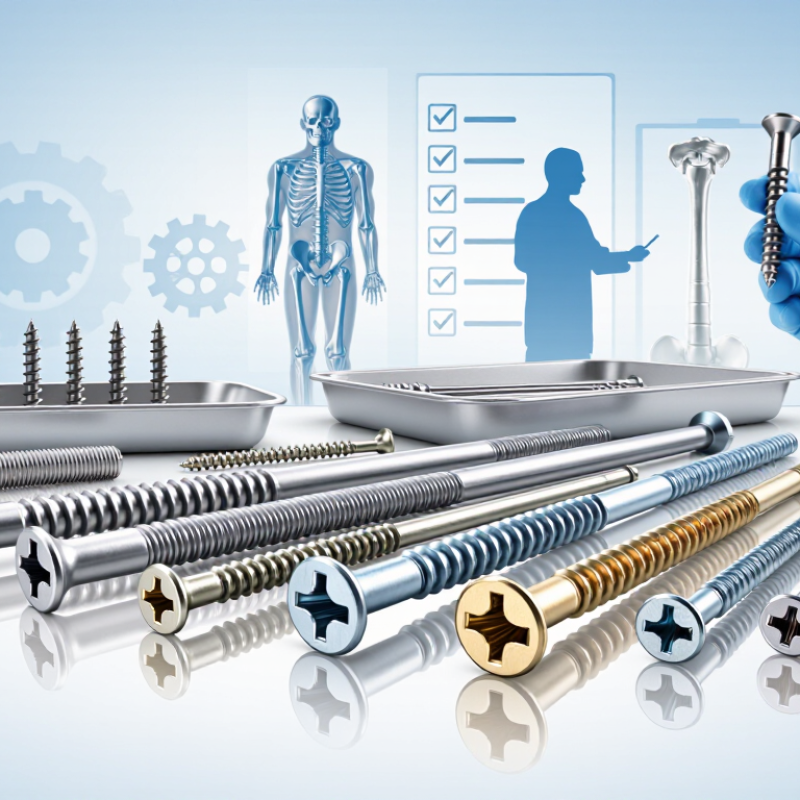
China Top Self Tapping Bone Screws Manufacturers

Definition and Role of Self-Tapping Bone Screws

China Top Self Tapping Bone Screws Manufacturers

Definition and Role of Self-Tapping Bone Screws

Self-tapping bone screws create their own thread while entering predrilled bone. Their cutting flutes reduce the need for separate tapping instruments. This can shorten surgical steps and improve placement control. The screw transfers compression or stabilizes fragments across a fracture line. It may also support plates during fixation procedures.

According to a 2024 Fortune Business Insights report, the global orthopedic implants market exceeded USD 50 billion in 2023. Continued growth reflects rising trauma care and an aging population. However, market expansion does not prove that every self-tapping screw performs equally well. Material strength, thread geometry, tip design, and surface quality remain critical. A poorly matched thread can damage fragile cortical bone. Excessive insertion torque may also cause stripping.

Tips: Confirm bone density before selection. Use the recommended pilot-hole diameter. Check the thread path under imaging when needed. Do not treat self-tapping screws as universal solutions. In clinical practice, the best choice depends on anatomy, fracture pattern, and fixation goals. That judgment is sometimes difficult. Manufacturing consistency matters too, especially for sharp cutting flutes and reliable torque response. ISO 5835 and related orthopedic standards can guide design and testing, but documented quality controls still require careful review.

Key Materials and Design Features of Bone Screws

China Top Self Tapping Bone Screws Manufacturers

Material selection strongly influences bone screw performance, imaging behavior, and long-term tissue response. Titanium alloy, especially Ti-6Al-4V, offers low density, high strength, and good biocompatibility. It also creates fewer imaging artifacts than many steel options. Stainless steel can provide dependable strength and cost efficiency, but its stiffness and magnetic response require careful clinical consideration.

Surface quality matters.

Reliable manufacturing requires controlled machining, cleaning, passivation, and dimensional inspection. A small burr near the cutting flute may increase insertion resistance or damage soft tissue. For this reason, experienced manufacturers examine thread height, pitch, tip geometry, and drive recess accuracy. Material certificates and traceable inspection records also support consistent quality.

Self-tapping screws use a fluted tip to cut threads during insertion, reducing the need for pre-tapping in suitable bone. The flute must remove debris without weakening the tip. A sharp profile improves cutting, while an overly aggressive design can reduce control. Thread depth should match the intended bone density and fixation purpose. Coarse threads may improve purchase in softer bone, while finer threads can suit denser cortical bone. Cannulated designs assist placement over a guide wire, although the hollow core can reduce torsional strength. That trade-off is easy to overlook. A polished surface is not automatically better, because excessive smoothness may affect handling and initial purchase. Proper design depends on testing, surgical feedback, and disciplined quality control.

How to Evaluate Chinese Bone Screw Manufacturers

China Top Self Tapping Bone Screws Manufacturers

How to Evaluate Chinese Bone Screw Manufacturers

Evaluating Chinese bone screw manufacturers requires more than comparing prices. Check whether the factory operates under a documented medical device quality system, such as ISO 13485. Verify certificates directly with the issuing organization. Review material certificates for titanium alloy or surgical stainless steel. Ask for batch records, dimensional inspection reports, and complete traceability from raw material to shipment.

Technical evidence matters. Request fatigue, torsion, pull-out, insertion torque, and corrosion test data for self-tapping designs. Confirm that testing reflects the intended screw size and clinical application. Examine thread geometry, tip sharpness, driver fit, and surface finish. A reliable manufacturer should explain tolerances clearly. It should also describe sterilization compatibility and packaging controls. Factory visits can help, but a polished tour is not proof of consistent production. I would still audit records, equipment calibration, nonconformance handling, and corrective actions.

Tips: Ask for recent samples from different production lots. Compare thread form under magnification. Contact reference customers when possible. Discuss complaint response times before signing an agreement. Do not accept generic test reports without product identification. One weakness remains easy to miss: communication quality. If engineers respond vaguely, technical changes may be misunderstood. That risk deserves attention. Good evaluation is not flawless; it requires repeated questions, independent verification, and careful documentation.

Leading Manufacturer Profiles and Product Capabilities

China’s self-tapping bone screw sector includes several distinct manufacturer profiles. Precision machining specialists often focus on titanium alloy screws, tight thread geometry, and flexible order volumes. Integrated orthopedic producers add design support, surface treatment, cleaning, and sterile packaging.

According to Grand View Research, the global orthopedic implants market is projected to grow steadily through 2030, increasing demand for dependable fixation components and traceable production.

Product capability separates experienced suppliers from simple metal workshops. Leading factories typically offer cortical, cancellous, and locking screw designs, with hexagonal or star-drive recesses.

Cannulated options support guided placement during surgery. Titanium alloy grades such as Ti-6Al-4V are common because they combine strength with corrosion resistance.

Stainless steel remains useful for cost-sensitive applications. ASTM F543 testing and ISO 5832 material compliance provide practical evidence, not just catalogue language.

Manufacturing profiles should also show quality-system depth. ISO 13485 certification, lot-level inspection, torque testing, and dimensional reports are important signals.

MarketsandMarkets reports continued growth in orthopedic device demand, but rising volume can expose weak traceability. A polished profile may hide inconsistent thread formation.

Buyers should review sample measurements, coating adhesion, packaging validation, and corrective-action records. Short lead times sound attractive. They are not always proof of capability.

Quality Standards, Customization, and Global Supply Considerations

Choosing a top self tapping bone screws manufacturer requires more than a polished catalog. Quality begins with controlled material selection, validated machining, and traceable batch records. Ask for evidence of ISO 13485-based quality systems and relevant material standards. These may include implant-grade titanium or stainless steel specifications. Dimensional checks should cover thread profile, pitch, core diameter, and driver fit. Surface finish matters too. Tiny burrs can affect insertion and tissue handling. Real production experience helps reveal these details before shipment.

Customization may involve screw length, diameter, thread geometry, head design, and packaging format. A reliable supplier should review the clinical application, instrument compatibility, and target market requirements before quoting. Samples should undergo functional testing, not only visual inspection. For global supply, confirm export documents, labeling languages, lead times, backup capacity, and change-control procedures. Sterilization responsibilities must be clearly assigned. Customs delays can disrupt surgical schedules. Some specifications look complete but omit tolerance ranges. This remains an avoidable weakness.

Tips: Request a first-article report and material certificates. Compare measured values with approved drawings. Audit communication, not just machinery. Ask how nonconforming parts are isolated and investigated. Keep a signed quality agreement. If a supplier avoids clear answers, pause the order. Lower price is not always lower risk. Sometimes, it is merely delayed cost.

China Top Self Tapping Bone Screws Manufacturers - Quality Standards, Customization, and Global Supply Considerations

Evaluation Dimension Relevant Quality Benchmark Typical Technical Requirements Evidence to Request from a Manufacturer Global Supply Consideration
Product scope Orthopedic and trauma fixation components Self-tapping cortical, cancellous, locking, or non-locking bone screws designed for a defined anatomical application Product catalogue, intended-use statement, engineering drawings, and applicable risk classification Confirm that the product configuration, instruments, packaging, and regulatory documents are consistent across export markets
Material selection Common implant-material standards include ASTM F136 or ISO 5832-3 for titanium alloy and ISO 5832-1 for wrought stainless steel Material grade, chemical composition, mechanical properties, corrosion resistance, and biocompatibility must match the approved design Mill certificate, heat number traceability, material test report, and certificate of conformity Material certificates should be available in English and linked to batch records for customs, audits, and complaint investigations
Mechanical performance ASTM F543 provides a recognized framework for metallic medical bone screws Insertion torque, removal torque, driving resistance, torsional strength, and dimensional conformity should be verified for the specified design Validated test methods, raw test data, acceptance criteria, and lot-specific inspection records Request test reports using internationally recognized methods and confirm whether reports cover production lots or only prototype samples
Self-tapping geometry Performance depends on the approved thread profile, cutting flute, tip geometry, and intended bone type Cutting tip must initiate the thread reliably while limiting insertion torque, debris generation, and risk of premature thread damage Drawing tolerances, insertion testing, microscopy or visual inspection records, and design-validation reports Verify compatibility with the customer’s driver, drill guide, pilot-hole protocol, and surgical technique
Dimensional control Dimensions should follow the approved technical drawing and any applicable implant-screw standard Controlled diameter, length, thread pitch, head profile, drive recess, tip length, concentricity, and surface condition First-article inspection report, calibrated measurement equipment records, and sampling plan Metric and imperial requirements must be clearly separated to prevent interchangeability and instrument-matching errors
Surface finish Surface treatment must be compatible with the selected material, intended tissue contact, and validated cleaning process No burrs, cracks, sharp unintended edges, embedded particles, or residues; optional treatments may include passivation, anodizing, or blasting where validated Surface-treatment specification, roughness records where applicable, cleanliness test results, and visual inspection criteria Ensure treatment documentation identifies process changes and subcontracted finishing operations
Biocompatibility Evaluation is generally structured around ISO 10993 and the nature and duration of patient contact Biological evaluation should address cytotoxicity, sensitization, irritation, systemic toxicity, and other endpoints justified by risk assessment Biological evaluation plan, test reports, toxicological assessment, and material or process-change history Reports may need review or bridging by the importer or legal manufacturer for the destination jurisdiction
Cleaning and contamination control Medical-device quality systems require controlled manufacturing, cleaning, inspection, and release processes Products should be free from machining oil, metal chips, process residues, and visible particulate contamination before packaging Cleaning validation, residual-limit criteria, environmental controls, and finished-product inspection records Clarify whether products are supplied non-sterile, sterile, or ready for customer sterilization
Quality management system ISO 13485 is the principal international quality-management reference for medical-device manufacturing Document control, design control, supplier control, process validation, nonconformance handling, CAPA, and traceability Current ISO 13485 certificate, certification scope, audit history, and major nonconformity status Check certificate validity, issuing body accreditation, manufacturing-site address, and product scope rather than accepting a generic certificate
Regulatory documentation Requirements vary by destination, including NMPA in China, the EU Medical Device Regulation, and applicable United States FDA requirements Technical file content, risk management, clinical or performance evidence, labeling, post-market procedures, and registration status must match the intended market Declaration or registration documents, ISO 14971 risk file summary, labeling samples, and market-specific authorization evidence A factory certificate or export certificate alone does not establish approval in every destination market
Customization capability Customization should be managed through formal design-transfer and change-control procedures Possible variables include diameter, length, thread form, head style, drive interface, material, coating, packaging, and labeling Design review records, prototype samples, validation protocol, change-control procedure, and tooling ownership terms Define intellectual-property ownership, exclusivity, minimum order quantity, tooling charges, and engineering-change notification periods
Packaging and shelf life Packaging must preserve product identity, cleanliness, and physical integrity through transport and storage Packaging configuration should prevent scratching, mixing of sizes, moisture exposure, and loss of traceability Packaging validation, label artwork, lot and expiry rules where applicable, and transport-simulation evidence Confirm carton dimensions, palletization, humidity protection, documentation language, and requirements for sterile-barrier systems
Production capacity Capacity should be demonstrated through validated equipment, qualified personnel, and stable process controls Capacity planning should account for machining, heat treatment where applicable, surface finishing, inspection, cleaning, packaging, and release Monthly capacity statement, lead-time history, bottleneck analysis, equipment list, and business-continuity plan Evaluate dual sourcing for critical processes and confirm contingency arrangements for material shortages, port delays, or equipment failure
Traceability and documentation Traceability should connect finished goods with raw material, processing history, inspection, packaging, and release records Lot identification should remain readable and consistent across the product, label, certificate, shipping carton, and invoice Sample batch record, certificate of analysis or conformity, inspection report, and recall procedure Agree on document-retention periods, electronic-document formats, language requirements, and response time for investigations
Export and logistics International shipments require accurate commercial, customs, product, and transport documentation Key controls include HS-code review, country-of-origin marking, invoice accuracy, export packaging, and agreed Incoterms Sample shipping documents, export references, packing list, certificate-of-origin process, and logistics performance data Compare total landed cost rather than unit price alone, including freight, insurance, duties, inspection, and regulatory-import costs
Supplier qualification scorecard Recommended assessment categories: quality, regulatory readiness, engineering, capacity, delivery, and commercial risk Use weighted scoring, for example: quality and compliance 30%, technical capability 25%, delivery and capacity 20%, customization 15%, commercial risk 10% Completed questionnaire, remote or on-site audit, sample approval, verification testing, and corrective-action review Approve production only after documentation review, sample testing, contractual quality agreements, and a defined change-notification process

Note: Applicable standards, regulatory pathways, product classifications, and test requirements should be confirmed for the specific screw design, intended use, sterilization status, and destination market.

FAQS

What is a self-tapping bone screw?

It cuts its own thread while entering a predrilled bone hole. Its fluted tip reduces separate tapping steps. It can compress fracture fragments or support a fixation plate.

How does a self-tapping screw improve surgical placement?

The cutting tip creates threads during insertion. This may shorten the procedure and improve placement control. Still, the result depends on bone density and insertion technique.

Which materials are commonly used for bone screws?

Titanium alloy offers low weight, high strength, and good tissue compatibility. It may also create fewer imaging artifacts. Stainless steel provides reliable strength, but stiffness and magnetic response need review.

Why do thread design and bone density matter?

Coarse threads may improve purchase in softer bone. Finer threads can suit denser cortical bone. A mismatched thread may damage fragile bone or lose grip.

What manufacturing details should buyers inspect?

Check thread height, pitch, tip geometry, and drive recess accuracy. Inspect samples under magnification. A tiny burr can raise insertion resistance or irritate nearby tissue.

Which quality documents should a manufacturer provide?

Request medical device quality-system records, material certificates, and batch traceability. Review dimensional inspection reports and equipment calibration records. Generic reports are not enough.

What testing is useful for self-tapping bone screws?

Useful data includes torsion, pull-out, fatigue, insertion torque, and corrosion testing. Tests should match the intended screw size and clinical use. Otherwise, the numbers may mislead.

Are cannulated screws always the better choice?

No. Cannulated designs can guide placement over a wire. Their hollow core may reduce torsional strength. That trade-off is easy to miss.

Is a factory visit proof of consistent quality?

Not really. A clean tour can look impressive but prove little. Review nonconformance records, corrective actions, inspection results, and recent samples from several lots.

How should manufacturers be evaluated beyond price?

Compare technical evidence, communication, packaging controls, and complaint response times. Ask engineers specific questions about tolerances and sterilization compatibility. Vague answers deserve another review.

Conclusion

Self Tapping Bone Screws are specialized orthopedic implants designed to create their own threads as they are inserted into bone, helping simplify fixation procedures and improve placement efficiency. Their performance depends on carefully selected materials such as titanium alloys or surgical-grade stainless steel, along with features including sharp cutting flutes, reliable thread geometry, suitable head designs, and compatibility with surgical instruments. These elements must provide strength, corrosion resistance, biocompatibility, and stable bone fixation.

When evaluating Chinese manufacturers, buyers should examine engineering expertise, production capacity, quality control systems, testing procedures, traceability, and experience with international medical device requirements. Leading suppliers may offer a broad range of screw sizes, shapes, and coatings, together with prototyping and customization services for different surgical applications. Important considerations also include documentation, packaging, lead times, communication, and export logistics. By comparing product capabilities, compliance evidence, customization support, and long-term supply reliability, healthcare distributors and device companies can identify dependable manufacturing partners for consistent global demand.

Henry

Henry

Henry is a dedicated marketing professional with a profound expertise in the company's offerings. With years of experience in the industry, he possesses an impressive understanding of the market dynamics and consumer behaviors that drive success. Henry is committed to sharing his insights through......