Zynfuse
Choosing Spinal Internal Fixation Systems is a clinical decision shaped by anatomy, diagnosis, surgical goals, and patient-specific risks. A system that suits one spinal level may not suit another. The surgeon must consider bone quality, alignment, the number of levels involved, and the stability required. Fit matters. Small details count, including screw dimensions, rod contour, implant compatibility, and the visibility of components on postoperative imaging.
This guide outlines practical questions to consider when comparing systems, from material and design features to instrumentation, evidence, and manufacturer support. It also explains why familiarity with a system matters: clear instruments and predictable handling can affect workflow, though they cannot replace sound surgical judgment. Product specifications and clinical studies are useful starting points, but they should be reviewed in context and alongside current professional guidance. No product choice guarantees a particular outcome.
There is no universal checklist that resolves every case. That is worth remembering. Trade-offs may remain, even after careful review, and available evidence may not answer every question for every patient. The goal is to help readers understand the factors clinicians evaluate—not to recommend an implant for an individual. Device selection and treatment planning should be made by qualified healthcare professionals who can assess the patient’s imaging, medical history, and specific needs.
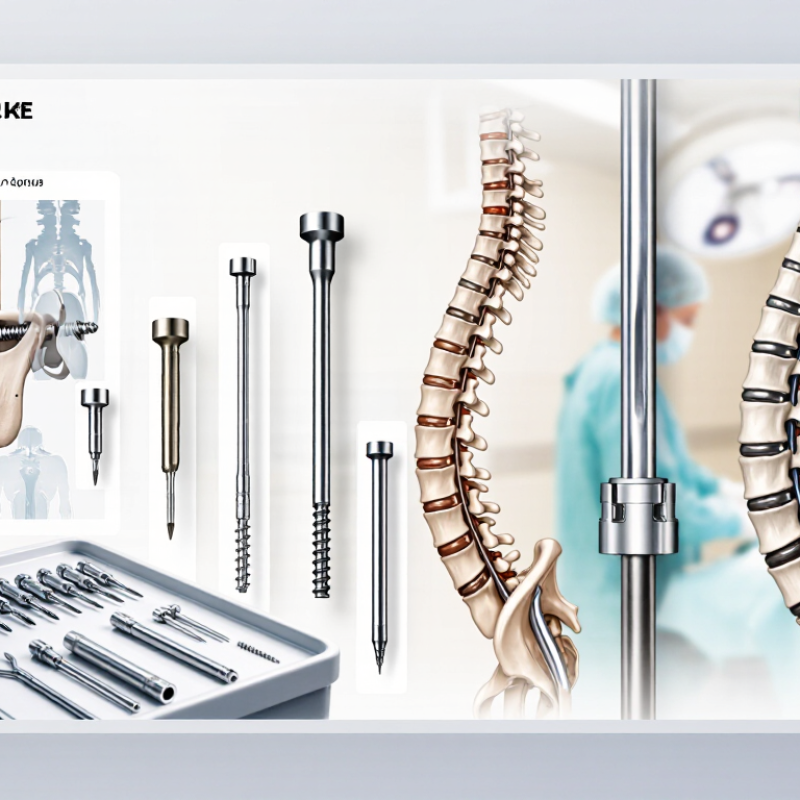
How to Choose Spinal Internal Fixation Systems?
Purpose and Main Components of Spinal Internal Fixation Systems
Spinal internal fixation systems stabilize selected vertebrae while healing or fusion occurs. Common components include pedicle screws, connecting rods, plates, hooks, and interbody cages. Screws anchor into bone; rods link them to limit unwanted movement. Cages may support disc height and hold graft material between vertebrae. Materials often include titanium alloys or polymer implants. Each part serves a specific mechanical role. Fit matters.
The World Health Organization’s 2023 low back pain fact sheet reports that 619 million people experienced low back pain in 2020, with projections reaching 843 million by 2050. This figure describes the broader burden, not the number of people who need fixation. System choice depends on the condition, spinal level, bone quality, anatomy, and surgical plan. Imaging and clinical assessment guide that decision. A sturdy-looking construct is not automatically the right one.
Tips: Ask what each component is intended to stabilize, and how it supports the planned fusion or healing. Check whether the system fits the patient’s anatomy and bone quality. Small details matter. A component list alone cannot show how an implant will perform in an individual case; that uncertainty deserves honest discussion.
| System Element | Primary Purpose | Common Applications | Key Selection Considerations |
|---|---|---|---|
| Pedicle screws | Anchor the construct to vertebrae and connect to rods for stabilization. | Frequently used in thoracic and lumbar posterior fixation; specialized designs are available for other regions and patient groups. | Vertebral anatomy, bone quality, intended trajectory, screw dimensions, and the surgeon’s fixation plan. |
| Rods | Link anchors and help maintain the planned spinal alignment while the treated segment heals. | Used in posterior constructs for fusion, deformity correction, and selected stabilization procedures. | Compatibility with the anchors, spinal region, construct length, contouring needs, and required mechanical properties. |
| Rod-to-screw connectors | Secure rods to anchors and, where designed, join or transition between rods. | Used when the planned construct requires specific attachment, extension, or rod-connection options. | Must be compatible with the system’s rod diameter and anchor interface; connection type should match the surgical plan. |
| Hooks | Provide alternative points of fixation by engaging selected posterior spinal structures. | May be considered in selected thoracic or deformity constructs when anatomy and the operative plan permit. | Anatomical fit, intended location, bone quality, and the potential effect on nearby neural structures. |
| Anterior cervical plates | Attach to the front of the cervical vertebrae to help stabilize a treated level or levels. | Commonly used with cervical discectomy and fusion when anterior plating is indicated. | Number of levels, vertebral dimensions, screw placement, plate profile, and compatibility with the planned graft or implant. |
| Interbody devices (cages) | Occupy the disc space to support disc-height restoration and provide a space for bone fusion. | Used in selected cervical or lumbar fusion procedures through approaches suited to the patient and treatment plan. | Approach, level, footprint, height, material, endplate fit, and whether supplemental fixation is planned. |
| Cross-connectors | Connect paired rods across the midline in selected constructs. | May be added to certain bilateral posterior constructs when the surgeon considers one appropriate. | Rod spacing, system compatibility, available space, and whether the added component is needed for the planned construct. |
| Materials | Provide the structural and biological properties required for the particular implant component. | Common implant materials include titanium alloys and stainless steel; some interbody devices use polymers such as PEEK, sometimes with radiographic markers. | Component-specific indications, imaging needs, material compatibility, allergies or sensitivities, and applicable device labeling. |
| Overall system selection | Match the fixation construct to the clinical goal while allowing appropriate stabilization and surgical access. | Selection depends on the diagnosis and procedure, such as fusion, deformity correction, or stabilization after trauma. | Consider spinal region and levels, imaging, anatomy, bone quality, patient factors, component compatibility, surgeon experience, and the device’s approved indications. The treating spine surgeon makes the final selection. |
It supports vertebrae during fusion or helps maintain alignment. The system depends on the anatomy and planned operation.
Options include pedicle screws and rods, cervical screws, plates, interbody cages, hooks, and wires. Not every option fits every case.
The surgeon considers the diagnosis, spinal level, bone quality, alignment, nerve pathways, and number of levels. Imaging helps. Small details matter.
It sits between vertebral bodies and supports spacing during fusion. Screws or plates may add stability.
No. Titanium is less stiff than 316L stainless steel, but material alone cannot guarantee healing. Design and patient factors matter.
Compatibility should be checked across the entire construct. Mixing metals may raise corrosion concerns, so do not assume separate parts work together.
No. MRI conditions depend on the exact implant and its labeling. Confirm field strength, heating limits, and positioning requirements before scanning.
Ask why the planned construct suits your anatomy, what alternatives exist, and how bone health may affect healing. Keep implant records. Plans can change.
Spinal Internal Fixation Systems help stabilize the spine when support is needed during healing or to address specific structural problems. Their main components may include rods, screws, plates, hooks, or connecting elements, selected according to the spinal region and the planned procedure. Choosing a system involves considering the patient’s anatomy, age, bone quality, diagnosis, overall health, and treatment goals, as well as the surgeon’s clinical assessment.
Different fixation systems are designed for different spinal regions and purposes, so their intended use and compatibility with other components matter. Materials should be evaluated for strength, durability, and suitability for the patient, while safety considerations include implant placement, imaging needs, and potential risks. The spine care team should review the available options together, weighing clinical evidence, patient preferences, and the long-term care plan to support an informed, individualized selection.