Zynfuse
The global orthopedic implant market is expanding as aging populations, sports injuries, and fracture care increase demand for dependable fixation systems. Grand View Research identifies orthopedic implants as a major medical-device segment, supported by advances in materials, surgical planning, and minimally invasive techniques. In this environment, Titanium Cannulated Screws remain important for surgeons treating fractures that require accurate placement and stable fixation.
Their hollow shaft allows guide-wire placement before final insertion. That detail matters. A guide wire can improve trajectory control near a joint surface or a narrow fracture line. Titanium also offers a favorable strength-to-weight balance, corrosion resistance, and strong biocompatibility. The AO Foundation’s surgical principles emphasize anatomical reduction, stable fixation, and protection of soft tissue, although implant selection must match the fracture pattern and the surgeon’s technique. Material choice alone cannot guarantee clinical success.
This guide reviews 10 Titanium Cannulated Screws for global buyers. It considers thread design, core diameter, cannulation size, head profile, compression behavior, surface finish, instrumentation, and documentation. ASTM standards and ISO 13485 quality systems provide useful reference points, while regulatory expectations differ across the FDA, European Union, and other markets. Buyers should verify certificates, clinical evidence, sterilization status, packaging integrity, and local registration before purchasing. Product tables can simplify comparison. They cannot replace professional judgment.
The ranking is practical, not absolute. A screw that performs well in a metatarsal may not suit a complex pelvic fixation. Pricing data also changes quickly with volume, logistics, and regional compliance costs. That limitation deserves attention. The analysis therefore combines published industry evidence, manufacturer information, and real-world purchasing considerations, helping hospitals and distributors make more defensible decisions.
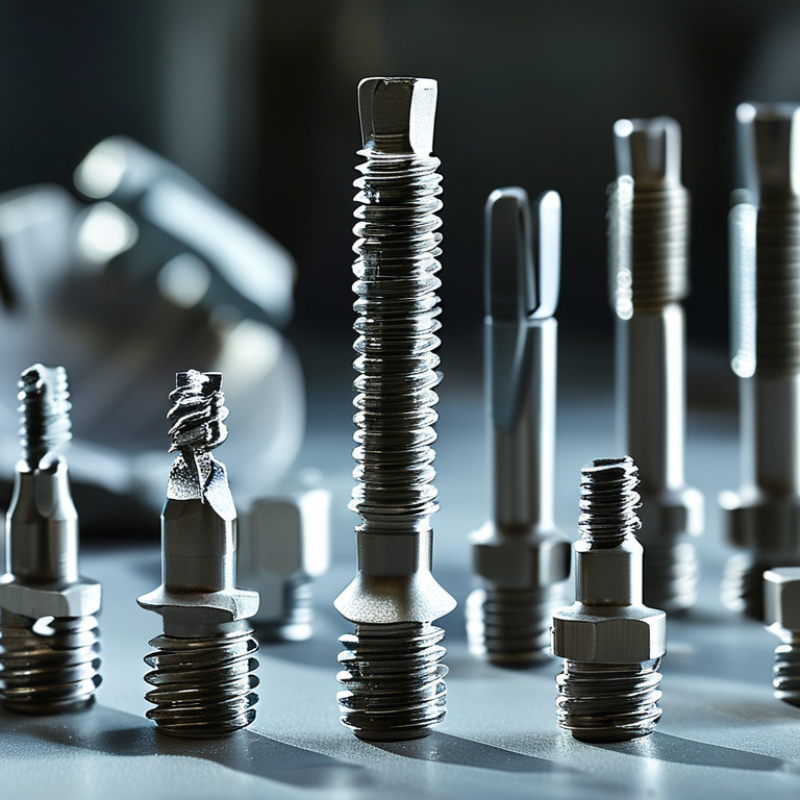
Titanium cannulated screws are fixation devices with a hollow channel through their shaft. This channel allows a guidewire to pass through the bone before screw placement. During surgery, the guidewire helps the surgeon plan the entry point, direction, and depth. The screw then advances over the wire, helping maintain the intended trajectory. Its threads grip bone and may create compression between fracture fragments. Simple in principle. Yet precision matters.
Titanium offers useful biocompatibility, corrosion resistance, and a favorable strength-to-weight ratio. It can also create fewer imaging artifacts than some denser metals. However, titanium is not automatically the best choice for every case. The hollow core may reduce resistance to bending or twisting compared with a solid screw. That trade-off is easy to overlook. Bone quality, fracture geometry, expected loading, and screw diameter must guide selection.
In practice, accurate imaging and careful measurement remain essential. The surgeon may confirm guidewire position, measure depth, prepare the channel, and verify final screw placement. A guidewire can look centered in one view but sit too close to a joint in another. It may not be harmless. Possible problems include wire migration, malposition, loosening, irritation, infection, or delayed healing. Proper training, sterile technique, and repeated imaging checks support safer use. Small errors can matter greatly.
Titanium cannulated screws are orthopedic fixation devices manufactured with a hollow central channel. A guidewire is first positioned through the bone, and the screw is then advanced over the wire to improve placement accuracy. Titanium alloys such as Ti-6Al-4V are widely used because they combine high strength, relatively low density, and good biocompatibility.
The chart shows nominal outer diameters commonly encountered across cannulated screw systems. Actual size availability, thread design, length, head configuration, and surgical indication vary by manufacturer and regulatory market. Diameter selection must be determined by a qualified orthopedic professional according to anatomy, fracture pattern, and fixation requirements.
Reference context: nominal diameter categories commonly used in orthopedic screw systems; values are presented in millimeters and are not a universal sizing standard.
Titanium cannulated screws combine a hollow shaft with guide-wire placement, supporting controlled fixation in difficult anatomical areas. Key specifications include Ti-6Al-4V alloy, screw diameter, length range, thread pitch, core diameter, and head design. Ti-6Al-4V is widely selected for its strength-to-weight ratio and corrosion resistance. The International Organization for Standardization identifies mechanical testing and material traceability as essential controls for implantable devices.
Cannulation must remain consistent from the tip to the drive recess. A rough internal surface can obstruct guide-wire movement or complicate removal. Buyers should review fatigue strength, pull-out performance, torsional resistance, and dimensional tolerances.
Grand View Research reported continued growth in the global orthopedic implants market, driven partly by trauma and reconstructive procedures. That growth increases demand, but volume does not replace verification. In practical evaluations, a larger diameter is not automatically safer. Bone quality, fracture pattern, and insertion torque still matter. Catalog tables can oversimplify this decision.
Tips: Confirm alloy certification, sterilization status, and lot-level traceability before purchase. Check whether the screw matches the intended guide-wire diameter. Review ISO 10993 biological evaluation data and applicable regional conformity records. Ask for fatigue-test conditions, not only headline results. Packaging also deserves attention; damaged sterile barriers can undermine an otherwise strong specification. One detail is often missed: driver compatibility. A precise head interface reduces stripping risk during insertion. However, surgeon preference and instrument ergonomics should be assessed together, not separately.
10 Best Titanium Cannulated Screws for Global Buyers
How to Evaluate the 10 Best Screws for Global Buyers
Choosing the ten best titanium cannulated screws requires more than comparing prices. Start with the intended procedure, bone quality, and required fixation strength. Check the titanium grade and confirm documented biocompatibility and mechanical testing. Thread design matters, especially pitch, depth, and the balance between purchase and insertion torque. Measure the cannulation carefully. It must match the guidewire system used by the surgical team. Head shape, drive interface, and length options also affect handling in a real operating room.
Tips: Request material certificates, fatigue data, dimensional drawings, and sterilization information. Review packaging integrity and traceability records before approving a shipment. Ask whether the supplier can provide consistent lot documentation for every order.
Global buyers should also examine regulatory files, quality-system evidence, labeling, and shelf-life data. Requirements differ across markets, so local regulatory review remains essential. A polished catalogue can still hide small dimensional differences. Confirm tolerances through samples or independent inspection when possible. In my experience, the cheapest screw is rarely the most economical after delays and rejected batches. Still, no checklist is perfect. Surgical feedback should influence the final selection, not just laboratory figures. Compare ten candidates using the same criteria, then document why each one passed or failed. A reliable supplier should answer technical questions clearly and provide evidence without vague promises.
10 Best Titanium Cannulated Screws for Global Buyers
Titanium cannulated screws serve different surgical needs, not one universal procedure. For femoral neck fixation, surgeons often consider partially threaded screws for controlled compression and fully threaded designs when positional stability matters. In foot and ankle fusion, lower-profile heads and strong torsional resistance can reduce prominence near thin soft tissue. Hand and wrist procedures usually need smaller diameters, shorter lengths, and precise guidewire control. Trauma applications may require longer screws, deeper threads, and predictable purchase in variable bone.
A 2023 systematic review of femoral neck fixation reported union rates commonly above 90%, although outcomes differed by fracture pattern and patient age. That figure should not become a promise. ASTM F136 remains a widely recognized specification for wrought titanium alloy used in surgical implants. Buyers should also review fatigue testing, cannulation diameter, thread pitch, sterile packaging, and radiographic visibility. Titanium can reduce MRI artifact compared with stainless steel, but the complete implant system still requires device-specific assessment.
Tips: Match the screw to anatomy first. Check the guidewire fit. Measure twice. A larger screw is not automatically stronger. I would compare pullout and cyclic-loading data, not only tensile strength. Surgical experience matters, yet inventory decisions sometimes overlook instrument compatibility. That mistake can delay a procedure. Request full technical files, applicable regulatory clearances, and lot traceability before purchasing. Published data may look impressive, but laboratory performance cannot replace clinical judgment.
Global buyers need more than a polished product image when choosing among the 10 best titanium cannulated screws. Material certificates should identify implant-grade titanium, such as ASTM F136 or ISO 5832-3 compliance. Dimensional reports must confirm thread pitch, core diameter, cannulation, and driver fit. The FDA’s recognized consensus standards database supports these standards for implant evaluation. That matters when suppliers use different testing language.
International sourcing also requires evidence beyond a certificate. ISO 13485 certification indicates a medical-device quality system, but it does not guarantee every batch is perfect. Ask for lot traceability, sterilization records, surface-finish results, and nonconformance history. Grand View Research projected steady growth in the global orthopedic devices market through 2030, increasing pressure on supply chains and inspection capacity. A lower quotation may hide longer validation work. It is worth checking.
Tips: Request three recent production samples, not only catalog pieces. Compare measurements with calibrated tools. Confirm packaging integrity after simulated transport. Require certificates from an independent laboratory when risk is high. Buyers should also review supplier audit reports, export documentation, and regional registration requirements. ISO 10993 biological evaluation can support material safety decisions, but it cannot replace clinical judgment. Small details matter.
| Rank | Screw Category | Typical Diameter & Length Range | Thread and Head Configuration | Common Guidewire Range | Material and Applicable Standards | Best-Fit Purchasing Scenario | Key Buyer Verification Points |
|---|---|---|---|---|---|---|---|
| 1 | Large-Diameter Partially Threaded ScrewCompression | 6.5–7.3 mm diameter 25–120 mm length |
Partially threaded; cancellous-style threads; hexagonal or star-drive head; cannulated shaft | Approximately 2.8–3.2 mm | Implant-grade titanium alloy, commonly Ti-6Al-4V ELI; ASTM F136 or ISO 5832-3 may be specified | High-load fixation where interfragmentary compression and a larger screw profile are required | Confirm thread pitch, core diameter, washer compatibility, guidewire size, fatigue testing, and available sterile packaging |
| 2 | Large-Diameter Fully Threaded ScrewPositioning | 6.5–7.3 mm diameter 25–120 mm length |
Fully threaded for positional fixation; blunt or self-tapping tip; cannulated drive recess | Approximately 2.8–3.2 mm | Ti-6Al-4V ELI is widely used; request ASTM F136 or ISO 5832-3 material documentation | Maintaining alignment without relying on a lag effect across the fracture line | Check full-thread geometry, tip design, dimensional tolerances, insertion torque data, and instrument fit |
| 3 | Medium-Diameter Partially Threaded ScrewGeneral Fixation | 3.5–4.5 mm diameter 20–70 mm length |
Partially threaded; cortical or cancellous thread options; low-profile head; cannulated core | Approximately 1.1–2.0 mm | Commercially pure titanium may be available under ASTM F67; titanium alloy options may follow ASTM F136 | Versatile fixation for foot, ankle, hand, wrist, and selected small-bone procedures | Verify actual material grade, thread-start position, head diameter, countersink requirements, and size increments |
| 4 | Medium-Diameter Fully Threaded ScrewAlignment | 3.5–4.5 mm diameter 20–70 mm length |
Fully threaded; uniform thread engagement; low-profile head; cannulated shaft | Approximately 1.1–2.0 mm | Implant-grade titanium or titanium alloy; material certification should identify the exact ASTM or ISO grade | Positional fixation and controlled stabilization when compression is not the primary objective | Request thread-form drawings, pull-out and fatigue data, guidewire compatibility, and cleaning instructions |
| 5 | Small-Diameter Headless Compression ScrewLow Profile | 2.0–3.5 mm diameter 10–40 mm length |
Headless design with differential or variable pitch; buried below the bone surface; cannulated | Approximately 0.8–1.1 mm | Ti-6Al-4V ELI or another qualified implant-grade titanium alloy; verify ASTM F136 or equivalent documentation | Small-bone fixation where reduced prominence and compression are important | Evaluate compression mechanism, insertion depth markings, driver durability, breakage resistance, and removal capability |
| 6 | Medium-Diameter Headless Compression ScrewBuried Implant | 3.5–5.0 mm diameter 20–70 mm length |
Headless differential-pitch or variable-pitch threads; cannulated; self-drilling or self-tapping tip options | Approximately 1.1–2.4 mm | Implant-grade titanium alloy, commonly Ti-6Al-4V ELI; request ISO 5832-3 or ASTM F136 evidence | Buried fixation for articular or periarticular applications requiring minimal hardware prominence | Confirm compression per insertion turn, maximum insertion torque, driver engagement depth, and instrument reusability limits |
| 7 | Cannulated Lag Screw with Washer CompatibilityLoad Distribution | 4.0–7.3 mm diameter 25–120 mm length |
Partially threaded lag configuration; compatible with optional washer; hexagonal or star-drive recess | Approximately 1.6–3.2 mm | Ti-6Al-4V ELI is commonly specified; washer material and galvanic compatibility must also be reviewed | Fixation in weaker or osteoporotic bone where a washer can help distribute load beneath the head | Check washer outer diameter, seat geometry, coating compatibility, head pull-through testing, and complete system validation |
| 8 | Self-Tapping Cannulated ScrewEfficient Insertion | 2.5–6.5 mm diameter 15–100 mm length |
Cutting flutes at the tip; partial or full thread options; cannulated body; low-profile drive head | Approximately 0.8–2.8 mm | Implant-grade commercially pure titanium or titanium alloy; confirm grade against ASTM F67, ASTM F136, or ISO 5832 documentation | Procedures seeking reduced tapping steps while preserving guidewire-controlled placement | Review tip sharpness, cutting-flute consistency, insertion torque, guidewire retention, and risk of wire entanglement |
| 9 | Low-Profile Cannulated Cortical ScrewCompact Anatomy | 2.0–4.5 mm diameter 10–60 mm length |
Fine-pitch cortical threads; compact head; cannulated shaft; self-tapping or pre-tap options | Approximately 0.8–1.6 mm | Commercially pure titanium or titanium alloy; require traceable heat-lot and chemical-composition records | Compact anatomical regions where a smaller thread profile and reduced head prominence are preferred | Confirm minimum and maximum lengths, thread pitch, head-to-shaft transition, driver standard, and radiographic visibility requirements |
| 10 | Long Cannulated Screw for Trajectory-Controlled FixationExtended Reach | 4.0–7.3 mm diameter 80–150 mm length |
Partially or fully threaded; extended shaft; cannulated core; standard or low-profile head | Approximately 1.6–3.2 mm | Ti-6Al-4V ELI is frequently selected; verify mechanical properties, surface condition, and applicable ISO or ASTM compliance | Long-bone or extended-trajectory fixation where accurate guidewire placement is essential | Assess straightness, cannula continuity, torsional strength, fatigue performance, packaging protection, and transport damage controls |
International sourcing note: The listed dimensions and configurations are typical market ranges rather than specifications for a particular product. Buyers should require current drawings, material certificates, risk-management documentation, biocompatibility evidence, validated sterilization information where applicable, and a quality-management certificate such as ISO 13485 from the selected supplier. Regulatory acceptance depends on the destination market and the intended clinical use.
: They support controlled fixation in difficult anatomical areas. A hollow shaft guides wire placement during insertion.
Confirm the titanium alloy grade, certification, corrosion resistance, and traceability. Material records should match each production lot.
The channel must remain clear from tip to drive recess. Rough internal surfaces can obstruct guide-wire movement.
Consider bone quality, fracture pattern, anatomy, and required fixation strength. A larger diameter is not automatically safer.
Request fatigue strength, pull-out performance, torsional resistance, and dimensional tolerances. Ask for test conditions, not only headline results.
Femoral fixation may require compression or positional stability. Foot and ankle procedures may favor lower-profile heads. Hand procedures often need shorter, smaller screws.
Confirm the cannulation matches the intended guide-wire diameter. Check drive compatibility carefully. Small mismatches can delay insertion.
Review sterilization status, shelf life, labeling, and sterile-barrier integrity. Damaged packaging can undermine an otherwise suitable product.
No. Surgical feedback, instrument ergonomics, and clinical judgment still matter. No checklist is flawless. I might overvalue laboratory figures without real operating-room input.
This guide introduces Titanium Cannulated Screws, explaining how their hollow design supports guide-wire placement and accurate positioning during orthopedic procedures. It reviews essential features such as titanium composition, thread configuration, screw diameter and length, head design, imaging compatibility, corrosion resistance, and mechanical performance. Readers will also learn how to compare the 10 best options by evaluating precision, strength, ease of insertion, anatomical suitability, documentation, and overall value.
The article organizes leading screw options by surgical application, including fracture fixation and other specialized orthopedic uses, while emphasizing the importance of selecting the correct size and configuration for each procedure. It also covers international sourcing considerations, including manufacturing consistency, traceability, sterilization status, packaging, regulatory documentation, quality management systems, and communication with suppliers. These practical guidelines help global buyers make informed, safety-focused purchasing decisions based on verified specifications and applicable medical-device standards.
