2026 Best Mandibular Reconstruction Plates Suppliers?

Time:2026-10-24 Author:Amelia
0%

Choosing among the 2026 Best Mandibular Reconstruction Plates Suppliers requires more than comparing prices or catalog photographs. These plates must support anatomical contour, fixation stability, surgical handling, and long-term mandibular function. A supplier’s experience with trauma, tumor resection, and virtual surgical planning deserves close attention.

Prof. Rainer Schmelzeisen, a respected maxillofacial surgeon and researcher, has emphasized, “The goal of reconstruction is to restore form and function.” This principle remains practical in the operating room. A well-designed plate should follow the mandibular curve without forcing excessive bending. Its screw holes should support reliable fixation, even near thin or damaged bone. Small details matter.

Material quality matters. So does traceability. Buyers should examine titanium specifications, fatigue testing, locking-screw compatibility, sterilization processes, and documented quality systems. Evidence from surgeons can reveal handling problems that brochures rarely mention. Custom design capability may also reduce intraoperative adjustment, especially after complex segmental defects.

But no supplier is perfect. A strong digital workflow cannot compensate for weak clinical support. A low price may hide limited inventory or slow technical assistance. Even respected brands require careful assessment.

This guide compares leading Mandibular Reconstruction Plates suppliers through an E-E-A-T-focused lens: practical experience, engineering expertise, clinical authority, and dependable documentation. The ranking should not replace surgeon judgment. It should sharpen it. Procurement teams must still confirm regional approvals, hospital protocols, and patient-specific requirements before selection.
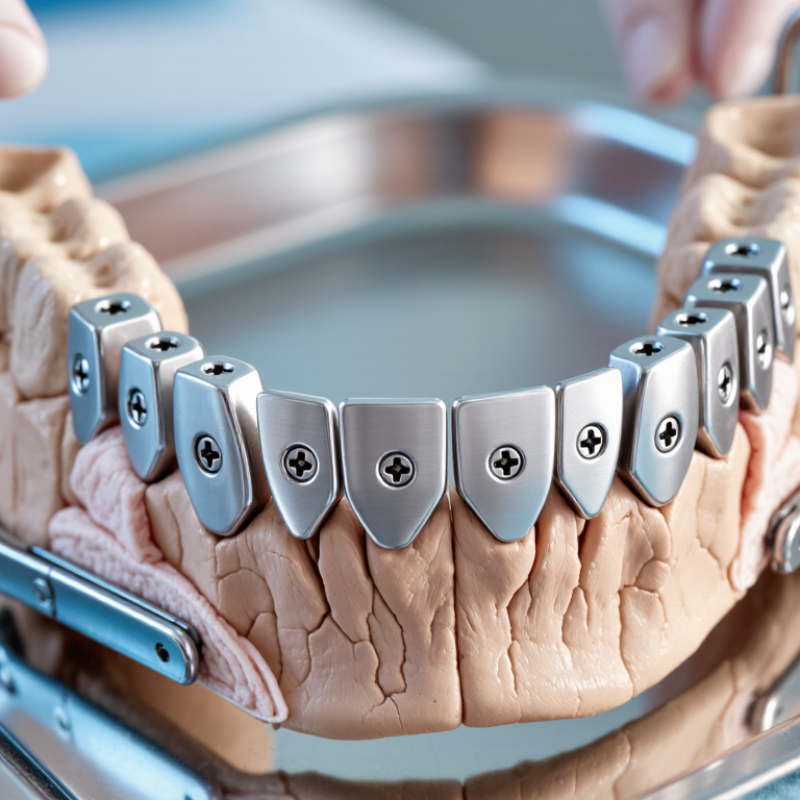
2026 Best Mandibular Reconstruction Plates Suppliers?

Mandibular Reconstruction Plates: Purpose, Design, and Clinical Applications

Mandibular reconstruction plates restore continuity after tumor removal, trauma, or severe infection. The need remains substantial. IARC’s GLOBOCAN 2022 report estimated 389,000 new lip and oral cavity cancer cases worldwide. Each case may require different structural support, soft-tissue coverage, and occlusal planning.

A reconstruction plate usually bridges the mandibular defect and supports bone grafts or vascularized flaps. Its design should match mandibular curvature, screw position, defect length, and loading conditions. Locking screw systems can improve fixation in compromised bone, but they cannot correct poor plate adaptation.

Thickness matters. Excessive bulk may irritate soft tissue, while insufficient strength can encourage fatigue failure. Digital planning and patient-specific manufacturing may improve fit, although access, imaging quality, and surgical experience still influence results.

Complication evidence deserves careful reading. A 2023 systematic review in the Journal of Cranio-Maxillofacial Surgery reported that plate exposure and infection remain important reconstruction concerns, with rates varying widely by defect type and follow-up period. Supplier evaluation should therefore include material traceability, dimensional accuracy, sterilization documentation, and technical support. ISO 13485 certification supports quality management, but certification alone does not prove clinical superiority. Surgeons should review fatigue testing, biocompatibility evidence, and published clinical outcomes.

No plate is universally best. Even well-planned reconstruction can fail when biology, fixation, or aftercare is underestimated.

Key Criteria for Evaluating Reconstruction Plate Suppliers

Choosing a mandibular reconstruction plate supplier in 2026 requires more than comparing prices or catalog images. Start with material traceability, manufacturing controls, and documented quality procedures. Each plate should have a clear batch record, consistent dimensions, and reliable corrosion resistance. Request evidence of mechanical testing, fatigue performance, and relevant regulatory clearance for the intended market.

Clinical experience matters as much as laboratory data. Ask whether the supplier has supported complex mandibular cases, including segmental defects and uneven bone surfaces. Review feedback from maxillofacial surgeons about screw fit, plate contouring, edge smoothness, and intraoperative handling. Useful suppliers provide anatomical design support, accurate imaging workflows, and responsive technical assistance. Delivery reliability also matters. A delayed plate can disrupt a carefully scheduled operation.

Do not judge expertise by a polished website. Speak with the engineering and clinical support teams. Ask how they manage design changes, complaints, product recalls, and difficult case reviews. Their answers reveal practical competence. No supplier is flawless. I would still examine weak points, such as limited customization or unclear after-sales support. A low quotation may conceal training fees, replacement delays, or inconsistent documentation. The strongest partner combines dependable production, transparent communication, verified clinical knowledge, and realistic promises. Clear records build trust.

Materials, Manufacturing Standards, and Product Quality

The 2026 best mandibular reconstruction plate suppliers should be judged by materials, manufacturing discipline, and measurable product quality. In clinical practice, titanium alloys remain widely trusted for their strength, corrosion resistance, and tissue compatibility. Commercially pure titanium suits many contouring needs, while Ti-6Al-4V ELI supports higher mechanical demands. Material certificates should identify the alloy, heat treatment, and production batch.

Manufacturing standards reveal more than polished product photographs. A dependable supplier should operate under ISO 13485 quality systems and apply documented risk controls. CNC machining, laser cutting, and controlled bending must preserve plate thickness and screw-hole accuracy. Inspectors should verify dimensions with calibrated equipment. Surface cleaning matters too. Tiny particles can remain after polishing. That detail is easy to overlook.

Product quality also requires fatigue testing, screw-fit checks, and traceability from raw material to shipment. Packaging should protect sterile or clean components from scratches, moisture, and deformation. I would ask for inspection records, biocompatibility evidence, and change-control procedures before comparing prices. Supplier audits can expose inconsistent batches. No supplier is flawless. Even experienced manufacturers may show small variation after repeated contouring, especially near thin bridge sections. That weakness deserves honest discussion, not marketing language. A practical review should also examine surgeon feedback, technical support, and how quickly the supplier handles dimensional concerns. The best choice may not be the cheapest one.

2026 Best Mandibular Reconstruction Plates Suppliers? - Materials, Manufacturing Standards, and Product Quality

Supplier-selection benchmark for mandibular reconstruction plate systems

Evaluation Dimension Preferred Specification or Practice Applicable Standard or Reference Quality Evidence to Request Supplier Assessment
Implant Material Implant-grade commercially pure titanium or titanium alloy suitable for permanent bone-contacting implants ASTM F67 for unalloyed titanium; ASTM F136 and ISO 5832-3 for Ti-6Al-4V ELI alloy Material certificate, heat or lot traceability, chemical composition, mechanical-property results Essential
Mechanical Design Adequate plate thickness, screw-hole geometry, load distribution, contouring capability, and resistance to fatigue during healing ISO 14630 general requirements for non-active surgical implants; validated product specifications Design verification reports, fatigue or static testing, dimensional drawings, clinical-use instructions Essential
Manufacturing Process Controlled CNC machining, precision forming, or qualified metal additive manufacturing with documented process parameters ISO 13485 quality-management system; ISO/ASTM 52900 series where metal additive manufacturing is used Process validation, equipment qualification, operator competence records, maintenance and calibration records Essential
Surface Finish Smooth, burr-free, cleanable surfaces with controlled roughness and no visible machining defects, cracks, or embedded contamination Product-specific drawings and validated inspection methods; ASTM F86 for preparation and handling of metallic surgical implants Surface inspection records, roughness measurements where specified, cleaning validation, visual acceptance criteria High Priority
Corrosion and Biocompatibility Material and surface treatment should not introduce unacceptable biological or corrosion-related risks under intended use ISO 10993 biological-evaluation framework; applicable corrosion and material-specific test methods Biological evaluation plan and report, chemical characterization, corrosion assessment, sterilization compatibility data Essential
Sterile Supply Option If supplied sterile, the validated sterilization method, packaging system, and claimed shelf life must be clearly defined ISO 11135 for ethylene oxide; ISO 11137 for radiation; ISO 11607 for terminally sterilized medical-device packaging Sterilization validation, packaging validation, seal-integrity testing, shelf-life and transport testing High Priority
Traceability Unique device identification, batch or lot control, raw-material traceability, and documented nonconformance handling ISO 13485; ISO 15223-1 for symbols; ISO 20417 for manufacturer-supplied information Device-history record, lot-release checklist, UDI or equivalent identification plan, recall procedure Essential
Regulatory Status The supplier should provide market-specific authorization, conformity documentation, and post-market surveillance support Applicable requirements of the target market, including medical-device quality and conformity-assessment rules Current certificates, declaration or approval documents, audit history, vigilance and complaint-handling records Essential
Customization Capability Support for patient-specific or procedure-specific designs, controlled design changes, and surgeon review where applicable ISO 13485 design-control principles; applicable patient-matched-device requirements Design-input records, revision control, approval workflow, case-specific verification, change-impact assessment Differentiator
Packaging and Logistics Packaging should protect plate geometry and surface condition throughout handling, storage, and transport ISO 11607 where sterile-barrier packaging is used; validated transport and storage conditions Packaging specifications, transport simulation, storage instructions, delivery and lot-control records High Priority
Selection note: A strong supplier should demonstrate documented compliance, validated manufacturing, complete traceability, and product-specific verification. Standards listed above should be confirmed against the target market and the intended device classification before procurement.

Comparing Supplier Capabilities, Customization, and Support

2026 Best Mandibular Reconstruction Plates Suppliers?

Choosing a mandibular reconstruction plate supplier requires more than comparing catalog prices. Surgical teams should examine manufacturing experience, material control, and quality documentation. A capable supplier can explain plate thickness, screw compatibility, and fatigue-testing methods clearly. Ask for production records, inspection procedures, and traceability from raw material to shipment. These details support safer planning and more consistent clinical use. Experience matters.

Customization can reduce intraoperative adjustments. Suppliers should review CT-based designs, anatomical contours, fixation zones, and planned osteotomy positions with the clinical team. Clear design revisions are essential before production begins. Reliable timelines also matter, especially when a case requires a patient-specific solution. However, customization is not automatically better. Poor communication can create delays or an unsuitable fit. That risk deserves honest discussion.

Tips: Request a sample design workflow before ordering. Check how quickly engineers answer technical questions. Confirm revision limits, packaging details, and delivery milestones in writing. Ask whether remote planning support is available during difficult cases. Do not judge support by friendly sales conversations alone. Test responsiveness with precise questions. A strong supplier should provide practical answers, not vague promises. Some evaluation methods remain imperfect, and clinical teams may overlook small service gaps. Reviewing past case feedback can reveal those weaknesses before they affect a surgical schedule.

Regulatory Compliance, Purchasing Factors, and Future Trends

2026 Best Mandibular Reconstruction Plates Suppliers: Regulatory Compliance, Purchasing Factors, and Future Trends

Regulatory compliance should lead every supplier assessment. In the United States, mandibular reconstruction plates generally require device classification review and, where applicable, a 510(k) pathway. FDA’s 2023 CDRH annual reporting recorded thousands of 510(k) decisions, showing how extensive the review environment remains. ISO 13485 certification is important, but it is not enough. Buyers should verify design history files, material traceability, sterilization validation, and post-market complaint procedures. Small gaps matter.

Purchasing teams should compare more than unit prices. Check titanium grade, plate thickness, screw compatibility, fatigue testing, anatomical contouring, and delivery reliability. A recent Grand View Research report projects the global orthopedic implants market to grow at a mid-single-digit CAGR through 2030. That growth may increase supplier competition, but it can also pressure quality systems. Ask for batch-level certificates. Inspect sample packaging. Request realistic lead-time data, not optimistic estimates.

Future suppliers will likely combine patient-specific planning, digital workflows, and additive manufacturing. The European Union’s Medical Device Regulation places stronger emphasis on clinical evidence, traceability, and post-market surveillance. Buyers should therefore request current technical documentation and cybersecurity controls for connected planning software. I would still avoid assuming that a digitally designed plate is automatically better. Surgical fit, handling feedback, and revision support remain practical tests. Data helps. Clinical judgment decides.

FAQS

What is the main purpose of a mandibular reconstruction plate?

It bridges a jawbone defect after tumor removal, trauma, or severe infection. It helps maintain facial structure and supports bone grafts or vascularized tissue. The plate does not replace biological healing.

How should a reconstruction plate fit the jaw?

Its contour should follow the patient’s mandibular curvature. Screw positions must match available bone and avoid vulnerable structures. Poor adaptation can weaken fixation, even with locking screws. Fit matters greatly.

Why are plate thickness and shape important?

A bulky plate may irritate nearby soft tissue. A thin plate may fatigue under repeated chewing forces. The ideal design balances strength, comfort, contour, and defect length. That balance is not always obvious.

What complications should clinicians and patients monitor?

Plate exposure and infection remain important concerns. Risk varies with defect size, tissue coverage, bone quality, and follow-up duration. Warning signs may include redness, drainage, pain, or visible hardware. Healing can still be unpredictable.

What should buyers examine when comparing suppliers?

Review material traceability, dimensional accuracy, screw compatibility, and sterilization records. Request fatigue-testing data and biocompatibility evidence. Inspect sample packaging and batch certificates. Low price alone is a weak comparison.

Does quality certification guarantee a clinically superior plate?

No. Certification shows that a quality system meets defined requirements. It does not prove better patient outcomes. Buyers should also review clinical evidence, complaint handling, and technical support. Small documentation gaps matter.

Which regulatory documents should a supplier provide?

Request current device classification information and applicable market authorization records. Check design history files, sterilization validation, and post-market surveillance procedures. Documentation should match the exact product configuration. Do not rely on a generic certificate.

Can digital planning and patient-specific manufacturing improve reconstruction?

They may improve anatomical fit and preoperative planning. Results still depend on imaging quality, surgical skill, tissue condition, and handling during surgery. Digital design is helpful, not automatically superior. Clinical judgment remains essential.

Conclusion

Mandibular Reconstruction Plates are essential tools for restoring jaw continuity, stability, and function after trauma, tumor removal, infection, or corrective surgery. This article explains their purpose, structural design, fixation principles, and clinical applications, while highlighting how plate geometry, contouring options, screw compatibility, and anatomical fit can influence surgical efficiency and patient outcomes.

It also outlines practical criteria for evaluating suppliers, including material selection, manufacturing consistency, quality-control procedures, documentation, customization capabilities, technical support, and delivery reliability. Buyers should consider whether a supplier can provide suitable product configurations, responsive communication, traceability, and clear regulatory documentation for the intended market. Looking ahead, advances in digital planning, patient-specific manufacturing, improved materials, and integrated surgical workflows may further enhance reconstruction solutions. A careful comparison of product quality, service capabilities, compliance practices, purchasing conditions, and long-term support can help healthcare organizations make informed supplier decisions.

Amelia

Amelia

Amelia is a seasoned marketing professional with a wealth of expertise in our company’s core offerings. With an unwavering passion for driving growth and innovation, she plays a pivotal role in shaping our marketing strategies and enhancing brand visibility. A key aspect of her responsibilities......